The Secret To Suicide Prevention - Eight Years On
Hypnotherapy: The Secret to Psychological Freedom
Eight years ago, I reached a point I never imagined I would reach, I wanted it all to end, but the past eight years has in many ways been more painful because nothing has changed.
I didn't want another coping strategy.
I didn't need someone to tell me to be more positive.
I couldn't simply think differently.
I was suicidal, and perhaps the hardest part to explain is that I had already done what we tell people they should do.
I had talked.
I did what we tell people to do
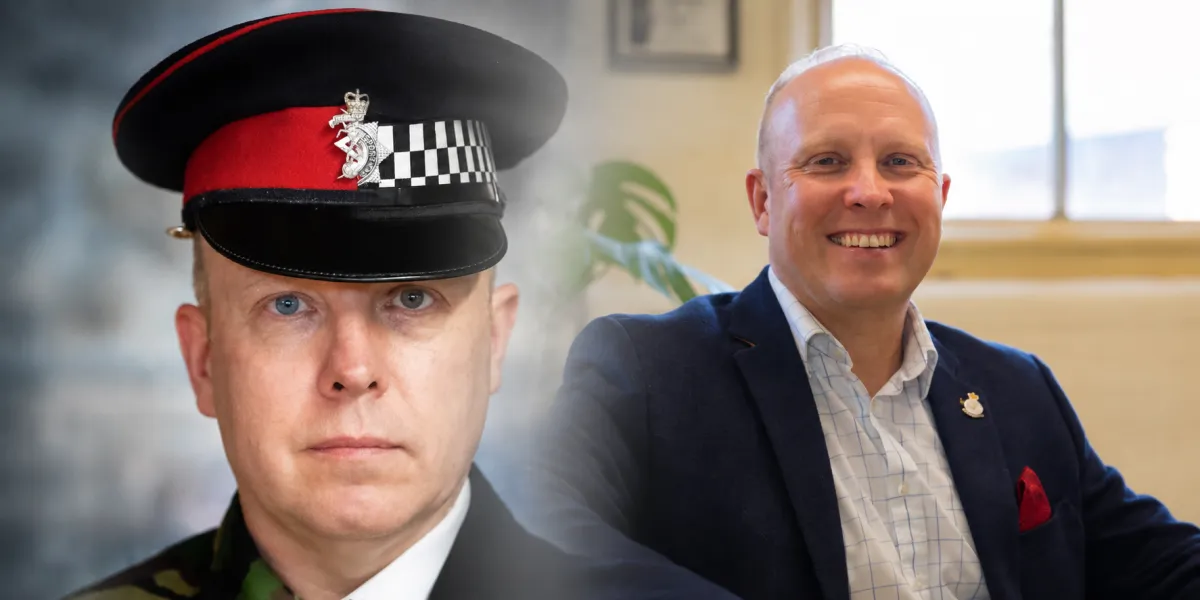
In 2016, I was assaulted while on duty as a police officer., afterwards, something didn't feel right, I knew myself well enough to recognise that something had changed, so I told someone.
After all, that's the message, isn't it?
It's good to talk.
Except, in my experience, talking didn't lead to the help I needed, what happened afterwards left me feeling worse and I know this isn't an isolated experience.
When I opened up and asked for help, what I got was a label, a target, so I did what countless capable people do when asking for help doesn't seem to help.
I buried it.
I carried on.
I worked.
I functioned.
I looked capable.
For nearly two years, I held everything together.
Until I couldn't, in 2018, I broke.
I was suicidal and was eventually sectioned.
Services gave me labels and diagnoses. They gave a name to what they could see, and I am not saying diagnosis has no value. Nor am I saying medication, counselling, CBT or other talking therapies don't help people. They absolutely can.
But something inside me kept saying:
This describes what is happening to me. It doesn't explain why it is happening.
That distinction eventually changed my life.
Eight years later, what has really changed?
World Suicide Prevention Day takes place every year on 10 September. The World Health Organisation's theme for 2024–2026 is Changing the Narrative on Suicide, with the call to action Start the Conversation. WHO explicitly says changing the narrative must include systemic change, better access to quality care and evidence-based strategies, but we also need to consider stratergies which to date have not been supported, regardless of anicdotal evidence.
Eight years after my own crisis, I find myself asking an uncomfortable question:
What happens after we start the conversation?
Because talking was never supposed to be the destination.
The latest provisional ONS figures show that 5,728 suicides were registered in England in 2025, a rate of 11.1 per 100,000, the same provisional rate recorded for 2024. Looking at occurrence data, ONS says suicide rates remained fairly stable between 2018 and 2023.
That distinction matters.
I don't need to exaggerate the statistics and claim everything is getting catastrophically worse.
The truth is sobering enough:
Eight years later, we have not achieved the reduction any of us should be satisfied with, and while we continue encouraging people to talk, I believe we also need to ask whether we are giving them enough choices about what happens next.
The memory that made no logical sense
My life started to change when I experienced hypnosis, not because somebody took control of my mind - Quite the opposite.
It helped me begin to understand it.
During hypnosis, I became aware of a memory from when I was about six years old. My brother had thrown a Frisbee into the sea. I went to retrieve it, and as I turned, a wave took me under.
I remember the sensation of being unable to breathe. I thought I was drowning.
My dad and brother dragged me out, and then they laughed.
I don't tell that story to blame them.
What matters is what the six-year-old version of me appears to have made that moment mean.
As an adult looking back, I came to recognise an internal conclusion:
“When I am in danger, the people I rely on to keep me safe cannot be trusted.”
Then something extraordinary clicked.
The feeling I had experienced as an adult, after the assault, after speaking up, after trusting people and feeling worse for doing so, felt remarkably similar. You see it wasn't the logical story that drove the behaviour it was the core feeling that multiple stories had connected to, that created a safety repsonse, and there was another piece I came to understand.
That original experience had not existed in isolation.
Over the years, whenever I experienced danger, trusted somebody for safety and then felt let down, the same association appeared to be reinforced.
Neuroscience gives us a useful way of understanding this.
Through synaptic plasticity, connections between neurons can become stronger when particular patterns of activity repeatedly occur together. This is closely related to Hebbian learning, often simplified as, “neurons that fire together wire together.”
In threat learning, repeated associations can make a cue increasingly capable of triggering an automatic defensive response, even when the present situation is not identical to the original danger. So an experience does not have to become objectively true to become subjectively predictive.
If your brain repeatedly learns:
danger + dependence on others = I am not safe, then that pattern can begin influencing what you expect, notice and feel before conscious reasoning has had much chance to intervene.
That does not mean the belief is true. It means the brain and body has become very good at predicting from the information it has repeatedly been given, and that was the revelation for me. But that experience wasn't possible through a conventional approach, because to access that working safety system, the mind needs to be responsive enough to let the true self in to observe it.
Your see I wasn't consciously choosing anxiety. My mind appeared to be using a well-rehearsed safety prediction. Once I could see where that prediction came from, I could finally begin questioning whether it still belonged in my life. The truth was I wasn't anxious, I just cared.
The circumstances were completely different. But the pattern was familiar.
I wasn't broken like I was told, my mind and body were doing exactly what I had subconciously programmed them to do, keep me safe.
Danger. Trust. Vulnerability. Disappointment.
What I had been calling anxiety suddenly looked different to me.
Rather than seeing it simply as an enemy to suppress, I began to see it as a warning signal from a mind attempting to protect me using information it had gathered in the past.
Was that childhood incident scientifically proven to be the root cause of everything that followed? No.
Hypnosis is not a truth serum, and memory is reconstructive. We should be extremely cautious about claiming that a memory accessed during hypnosis provides an infallible historical explanation, you see the story isn't the key, it's the way it makes us feel, because feelings drive behaviour not thoughts.
What mattered was that I had discovered a relationship between experience, meaning, feeling and response that finally made sense of something logic alone had never resolved, and once I saw it, something changed. The feeling fell away and I was back in control.
The memory hadn't changed. I had.
At six years old, I didn't have the knowledge I have now. I didn't have the awareness I have now, and most importantly, I didn't have the autonomy I have now.
I was a child. I depended on other people, and as an adult I could look at that same information with a completely different set of resources.
The event didn't change.
My relationship with the meaning I had attached to it changed.
This is where neuroscience becomes fascinating.
Research into memory reconsolidation suggests that, under certain conditions, retrieving a memory can make aspects of it temporarily more open to modification before it is restabilised. The science is complex and researchers continue to debate its limits, but there is substantial evidence that memories are more dynamic than the old idea of permanently stored, unchangeable files. That matters because we often behave as though understanding something intellectually should automatically change the response, but the mind isn't logical.
Anyone who has experienced anxiety, panic, trauma responses, phobias or overwhelming stress knows how strange that assumption can be. Logically you know there is nothing to fear, but the response and experience is very different.
You can know logically that you're safe, and still not feel safe.
Einstein gives us a metaphor — neuroscience gives us the mechanism
Einstein taught us that time is not quite as simple or absolute as everyday experience suggests. I am not suggesting that General Relativity explains trauma or hypnosis. It doesn't.
But it gives us a useful metaphor.
The clock on the wall said I was an adult. Yet something happening in the present appeared to be activating an association formed when I was six.
The calendar knew decades had passed. The learned response didn't need to consult a calendar. It recognised a pattern.
Neuroscience gives us a much firmer foundation for understanding why logic can struggle in those moments. The prefrontal cortex plays an important role in working memory, attention, decision-making and the top-down regulation of thought, behaviour and emotion. Research has shown that even relatively mild uncontrollable stress can rapidly impair aspects of prefrontal function.
In simple terms:
The more overwhelmed we become, the harder it can become to use the very thinking abilities we are being told to use to stop being overwhelmed.
That doesn't make talking therapy wrong. It does help explain why, for some people, insight alone may not create the change they are looking for. It's like trying to change a tyre while the car is still moving. Sometimes you need a different environment in which to look at what is happening.
So what actually is hypnosis?
This is where one of the biggest misconceptions appears. People hear hypnosis and imagine mind control. They imagine losing consciousness. They imagine surrendering their will to another person.
Even the American Psychological Association's clinical hypnosis material identifies beliefs such as being unable to resist suggestions or relinquishing your willpower to the hypnotist as misconceptions about hypnosis.
For me, hypnosis was almost the reverse. Hypnosis became de-hypnosis.
It wasn't about somebody programming me. It was about becoming the observer of programming I had already acquired.
The beliefs.
The associations.
The predictions.
The meanings I had attached to experiences.
The automatic relationship between a thought, a feeling and a physical response.
What people often call the “subconscious” can be understood more cautiously as the many learned, automatic processes that operate without us consciously analysing each one.
Your mind is constantly using previous information to anticipate what may happen next.
That ability is incredibly useful, until it isn't.
Hypnotherapy, as I practise and understand it, creates an opportunity to become curious about those relationships rather than simply fighting the symptom they produce.
What happens to the body matters too
This isn't just about thinking. Hypnosis has measurable physiological effects.
A 2022 review examined 49 studies involving 1,315 participants and found that, overall, the research tended to show reductions in sympathetic responses and/or increases in parasympathetic tone during hypnosis, although the authors also highlighted methodological limitations and variation between studies.
A controlled study of 121 participants similarly found reduced tonic sympathetic activity during hypnosis compared with a control condition, again, this does not mean hypnosis flips a magical switch from “sympathetic” to “parasympathetic” in every person.
Human physiology is far more complicated than that, but it does show why I reject the idea that hypnosis is merely somebody lying in a chair imagining things.
Something different can happen in attention, perception and physiology, and for me, that created an environment where I could stop arguing logically with the response long enough to understand it differently.
“But hypnotherapy isn't backed by science…”
This may be the misconception I find most frustrating. There is a legitimate debate about how strong the evidence is for hypnosis for different conditions.
That is science. But saying there is no science behind hypnosis is simply not an accurate description of the research literature.
A major review published in Frontiers in Psychology brought together 49 meta-analyses containing 261 distinct primary studies of hypnosis for mental and physical health outcomes.
The strongest evidence was found around medical procedures and pain. More than half of the reported effects were at least medium in size. The review also highlighted important limitations: substantial overlap between studies and only nine of the 49 meta-analyses receiving a high methodological-quality rating. The researchers called for more high-quality trials and more comparisons with established interventions. That isn't an inconvenient weakness we need to hide.
That is what science looks like.
Evidence can be promising without being complete. In fact, the American Psychological Association publishes an entire professional volume called Evidence-Based Practice in Clinical Hypnosis, examining research involving anxiety, depression, pain and behavioural medicine.
NICE itself recommends considering hypnotherapy alongside CBT and psychological therapy for people with refractory irritable bowel syndrome who have not responded to pharmacological treatment.
There is another contradiction that I believe deserves far more attention.
If NICE already recommends considering hypnotherapy alongside CBT and psychological therapy for people with refractory IBS who have not responded to pharmacological treatment.
Think about what that means.
IBS is now understood as a disorder of gut–brain interaction. Its symptoms can involve the way the brain interprets signals from the body, visceral sensitivity, autonomic processes and communication between brain and gut, and hypnotherapy can help some people with it.
So we have already crossed an important scientific threshold. We cannot simultaneously acknowledge that hypnosis can influence a condition involving brain–body communication and then dismiss hypnosis as something with no scientific basis.
Hypnosis has been studied in hundreds of primary studies across pain, anxiety, medical procedures and a variety of psychological and physical conditions.
The evidence is stronger for some applications than others, so why isn't it a mainstream discussion?
There are areas where we simply do not yet have enough high-quality research and this for me is the oppotunity. Because perhaps the question should not be:
“Why should we consider hypnotherapy for anything else?”
Perhaps it should be:
“If we know hypnosis can influence some of the systems involved in perception, prediction, pain and brain–body communication, why aren't we investing more seriously in finding out where else those effects could be useful?”
That is not an argument against science. It is an argument for more of it, and science should also tell us where evidence isn't yet strong enough.
The evidence Catch-22
I would love to be involved in larger clinical trials. I would welcome researchers scrutinising what I do.
Test it. Measure it. Challenge it. Compare it.
Follow people up six months and twelve months later.
That is how we learn.
But serious clinical trials require money, research infrastructure, partnerships, ethics processes, academics and access to participants, and this creates a question I believe deserves far more attention.
An approach can be told:
“You need more large-scale clinical evidence before we will take you seriously.”
Yet producing that evidence requires the involvement and resources of the very institutions that may not yet consider the approach worth investigating.
That risks becoming a Catch-22. I am not arguing that we should lower scientific standards.
The opposite. I want more science.
But science should be a method of enquiry, not a badge owned exclusively by the approaches we already fund, teach and provide. Absence of a large clinical trial should make us ask for better research.
It should not automatically be translated into: “There is nothing here worth investigating.”
Let's look at the data and ask about the ROI in mainstream approaches.
This is where the conversation becomes uncomfortable, because “evidence-based” does not mean “works for everybody”.
In June 2026, NHS Talking Therapies reported that 50.6% of eligible referrals moved to recovery. The stricter measure of reliable recovery was 48.1%.
The NHS defines reliable recovery as someone both moving from clinical “caseness” at the start of treatment to below that threshold at the end, while also demonstrating a statistically reliable improvement. Those figures need to be interpreted properly.
They do not mean that half of everyone who approached the NHS failed treatment. The denominator concerns people who finished a course of treatment and met the relevant criteria., and they certainly don't mean talking therapies don't work.
They clearly help a substantial number of people.
But 48.1% reliably recovering leaves another question sitting in the room:
What about the people who don't?
Where is their full menu?
If CBT helps you, fantastic.
If counselling helps you, fantastic.
If medication helps you, fantastic.
If EMDR helps you, fantastic.
I am not interested in taking effective options away from anybody, but more often than not after years of these types of therapies many of my clients come to me as a last resort and leave saying I wish I had come to you first.
I want to know why our response to someone who is still struggling should ever be limited to recycling the same menu, or there is nothing else we can do.
NHS Talking Therapies is explicitly structured around NICE-recommended interventions for anxiety, depression and PTSD. That's understandable.
But it also means that the therapies inside those pathways naturally receive greater visibility, institutional trust and public awareness, and something being outside a particular pathway is not the same as there being no evidence for it.
We need to remove the monopoly and start giving informed choice.
Regulation is important. But so is understanding what regulation means.
This debate is sometimes reduced to qualifications.
HCPC regulated.
BACP accredited.
Therefore legitimate.
Anything else?
Questionable.
But the reality is more nuanced.
HCPC statutory regulation applies to specific protected practitioner-psychologist titles. Titles such as counsellor, psychotherapist and therapist are not themselves HCPC-protected titles.
BACP operates a register accredited by the Professional Standards Authority.
But hypnotherapists don't get the same oppotunities because the qualification comes before the experience.
Accreditation does not prove that every treatment offered by every practitioner is clinically effective. Nor should it.
But it demonstrates why the conversation cannot simply be:
“HCPC/BACP equals safe and scientific; everything outside it equals unregulated and unscientific.”
Standards matter.
Training matters.
Ethics matter.
Evidence matters, And so do outcomes.
We should be capable of looking at all of them and having informed choice.
The full menu
If I could go back to myself in 2018, I know what I wish somebody had said.
Not: “Don't use the NHS.”
Not: “Medication is bad.”
Not: “Talking therapy doesn't work.”
I wish somebody had said:
“Here is what the NHS can offer you. Here are other local and independent approaches available to you.
Here is what we know about the evidence for each one. Here are the limitations. Here are the standards you should look for in a practitioner. Now let's help you make an informed choice.”
That is all.
Informed choice does not require endorsement. It requires information.
Why can't a GP, psychologist, counsellor, hypnotherapist, coach, employer and community organisation recognise that different people may need different things at different stages?
The person struggling should be the centre of the system.
Not the profession.
Not the qualification.
Not the institution.
Not me.
What psychological freedom means to me
Hypnotherapy didn't give me a life without difficult feelings.
That isn't psychological freedom.
I still experience difficult days.
I still experience discomfort.
I am human.
Freedom is understanding enough about what is happening inside me that I have greater authority over what happens next.
It is noticing a response instead of automatically becoming the response or being confined to a label that suits someone elses explanation of my experience.
It is being able to ask:
What is this feeling telling me?
What am I predicting?
Is that prediction based on what is happening now, or information I learned somewhere else?
What choice do I have today that I didn't have then?
I learned how my thoughts and physical responses interacted.
I learned that uncomfortable moments could become opportunities to understand myself rather than immediate evidence that something was wrong.
Most importantly, I developed something I had lost:
Self-trust and Autonomy
Perhaps that is the ultimate psychological freedom. To know who you are despite what somebody else thinks.
Despite what somebody else says. Despite what somebody else does.
Not because nothing affects you.
But because you know how to find your way back to yourself.
I believe every human should have that choice and it's why The Mind Mentor exists, to teach people how their mind actually works, so therapy doesn't become like a netflix prescription that you believe you can't live without.
The Mind Mentors Mission
Eight years after reaching the lowest point of my life, I don't believe “It's good to talk” is enough.
It was never the destination. Talking can start the conversation. Awareness can help us recognise the problem. But awareness without action changes very little.
The Mind Mentors Mission is about informed choice.
No person should have to spend their life simply suffering, coping and managing because they were never told that another legitimate avenue of exploration existed.
That doesn't mean hypnotherapy is right for everybody. It doesn't mean conventional services are wrong. It means we all deserve access to choice, and the autonomy to decide what we want to explore.
The Appeal
If you got this far drop a comment, share this aritcle, beacuse people are struggling and what they have tried so far may not have workd but there are other options, and if you are a clinician, business, organisation, researcher or professional who believes, as I do, that the future of mental health should involve collaboration, innovation and genuinely informed choice, I would like to hear from you too.
Because starting the conversation matters.
But it is what we are prepared to do after that conversation that may change a life.
It's good to talk was never the destination, and awareness without action is pointless.
How we work together to make real change is the key and if you would like to here some of the stories of how others lives have changed then click the link below
#suicidepreventionday #mentalhealthinnovation #hypnotherapy #nlp #wellbeingatwork
Important: This article describes my personal experience and perspective and is not a substitute for individual medical or mental-health advice. Hypnotherapy is not suitable for every person or every condition. If you are in immediate danger or feel unable to keep yourself safe, call 999 or go to A&E. In the UK and Ireland, Samaritans can also be contacted free, 24 hours a day, on 116 123.